
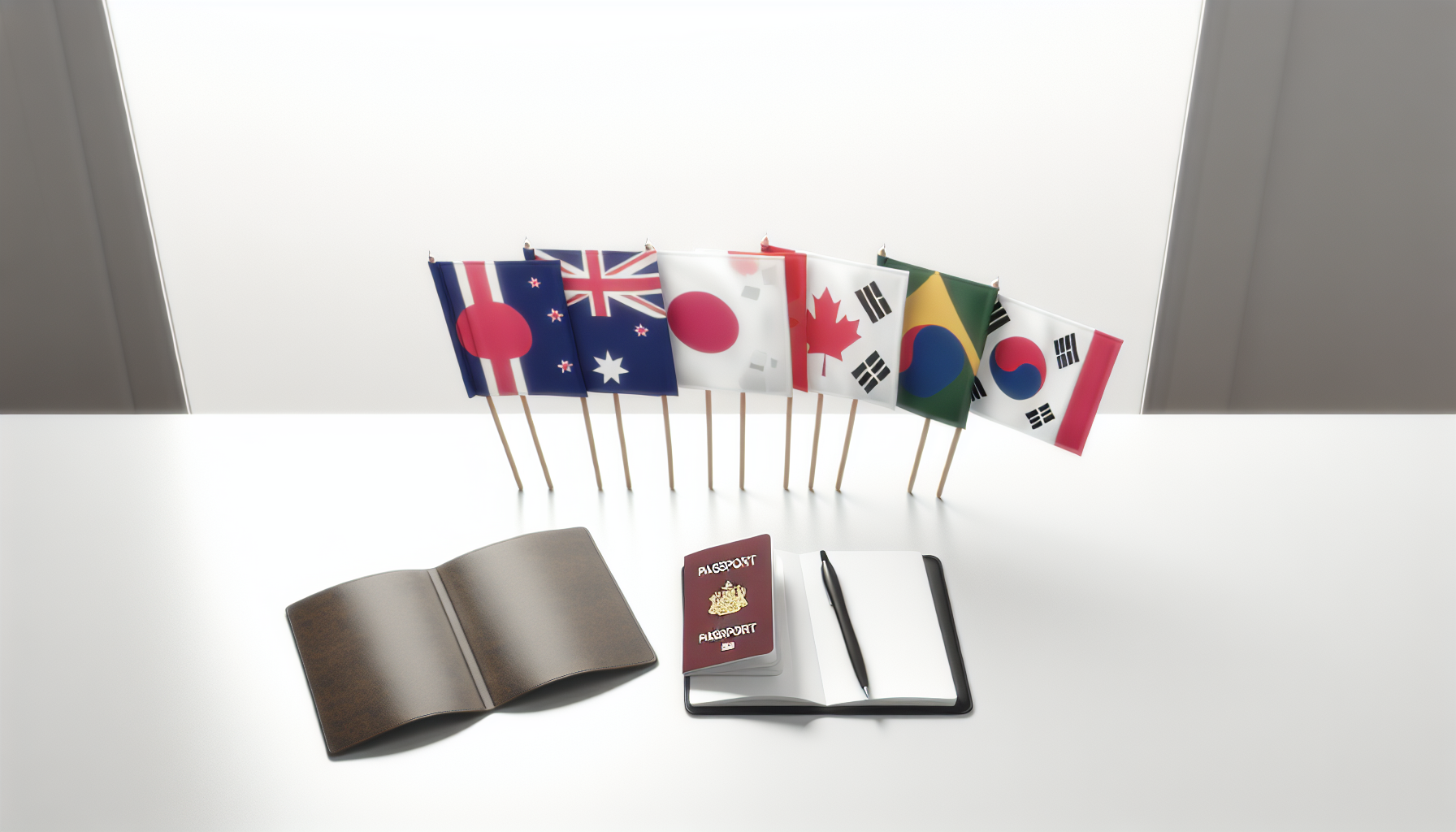
Most UK students who want to intern abroad face the same frustrating obstacle: visa restrictions. Post-Brexit, working in EU countries requires sponsorship paperwork. Internships in the US need a J-1 visa that costs over £1,000. And in most of Asia, the line between what is legal and what everyone actually does is uncomfortably blurry.
But there is a visa category that solves almost all of these problems, and most students have never heard of it: the Working Holiday Visa.
The UK has working holiday agreements with over 50 countries. These visas give you the legal right to live and work abroad for 12 to 24 months, with no employer sponsorship required. You can take paid internships, switch roles, freelance, or combine work with travel. For students and recent graduates under 30 (or 35 in some countries), it is the single most powerful visa option available.
What Is a Working Holiday Visa?
A Working Holiday Visa (WHV) is a reciprocal agreement between two governments. The UK agrees to let young citizens of Country X live and work in Britain, and Country X does the same for young British citizens. The core features are consistent across most agreements:
- Age range: Typically 18 to 30 at the time of application, though some countries extend this to 35
- Duration: Usually 12 months, with some countries offering 24 months or the option to extend
- Work rights: Full or near-full permission to take paid employment, including internships
- No sponsorship needed: Your employer does not need to sponsor your visa. You apply independently
- Flexibility: You can change employers, take breaks for travel, and in most cases work in any industry
The "holiday" in the name is somewhat misleading. While the visa is designed to allow young people to travel and experience another culture, the work rights are real and substantive. You can hold professional roles, earn a proper salary, and build genuine career experience.
Which Countries Offer WHV to UK Citizens?
The UK has one of the largest WHV networks in the world. Here are the most relevant destinations for career-building internships:
| Country | Age Limit | Duration | Visa Cost | Work Rights |
|---|---|---|---|---|
| Australia | 18-35 | 12 months (extendable to 3 years) | AUD 640 (~£330) | Full work rights, max 6 months per employer |
| Japan | 18-30 | 12 months | Free | Full work rights |
| Canada | 18-30 | 12-24 months | CAD 357 (~£210) | Full work rights (IEC programme) |
| South Korea | 18-30 | 12 months | Free | Full work rights |
| New Zealand | 18-30 | 12 months (extendable by 3 months) | NZD 455 (~£220) | Full work rights, max 6 months per employer |
Other countries with UK WHV agreements include Hong Kong, Taiwan, Argentina, Chile, Uruguay, Israel, India, and several more. The five listed above are the strongest options for professional internships due to their developed economies, English-language or English-friendly work environments, and concentration of international companies.
Why WHV Is a Game-Changer for Interns
The working holiday visa fundamentally changes the internship equation in three ways that matter enormously to UK students.
1. You can earn a real salary
On a WHV, you have the same work rights as a local employee in most cases. That means you are entitled to the local minimum wage and can negotiate market-rate compensation. In Australia, the minimum wage is AUD 24.10 per hour (~£12.40), one of the highest in the world. In Japan, Tokyo's minimum wage is JPY 1,163 per hour (~£6.20), which goes further than you might think given the low cost of daily living outside of rent. Even a part-time internship generates income that offsets your travel costs.
Compare this to the typical internship-abroad experience: unpaid placements where you spend £500 to £1,200 per month from savings. A WHV internship can be cash-flow positive.
2. You stay longer and go deeper
Tourist visas and short-term business visas typically limit you to 30 to 90 days. A WHV gives you 12 to 24 months. That means you can take a 6-month internship instead of a 6-week one. The difference in career impact is enormous. A 6-month placement gives you time to own projects end to end, build real professional relationships, develop genuine expertise, and leave with a portfolio of completed work rather than a list of tasks you observed.
3. You do not need employer sponsorship
This is the advantage that most students underestimate. In most countries, hiring a foreign intern requires the employer to sponsor a work visa. This is expensive, slow, and risky for the company. Many businesses that would happily take on a UK intern simply cannot justify the sponsorship cost and paperwork for a short-term placement.
With a WHV, you arrive with work rights already in hand. You can approach any company, apply for any role, and start immediately. The employer's only obligation is to pay you fairly and comply with local employment law. This dramatically expands the number of companies willing to offer you an internship.
Because WHV holders do not require sponsorship, you can access internship opportunities that are never advertised to international students. Many companies fill these roles through local job boards, LinkedIn, or direct applications. We help you identify and approach these hidden opportunities as part of our placement service.
Best WHV Destinations for UK Students
Sydney, Australia
Sydney is the top WHV internship destination for UK students, and for good reason. The city has a thriving business, finance, and tech scene, with major companies like Atlassian, Canva, and Commonwealth Bank headquartered here. The internship culture is well developed, with structured programmes at large firms and more hands-on roles at startups. The high minimum wage means even entry-level intern roles pay well. The 6-month-per-employer limit encourages you to take two different placements during a 12-month WHV, which builds a broader portfolio. Sydney is expensive, but the earning potential more than compensates.
Tokyo, Japan
Tokyo is one of the most underrated internship destinations in the world. Japan's WHV is free to apply for, and the country offers unique opportunities in technology, engineering, design, gaming, and automotive industries that simply do not exist elsewhere. While Japanese language ability opens more doors, the number of English-friendly companies in Tokyo has grown significantly, especially in the startup ecosystem and at international firms. The cost of daily living (food, transport) is surprisingly affordable, though rent in central Tokyo is high. The cultural experience alone makes a Tokyo WHV internship unlike anything you can do in the Western world.
Montreal, Canada
Canada's IEC (International Experience Canada) programme is the country's version of the WHV. Montreal is an excellent choice for interns because it combines a strong tech and creative industry scene with a significantly lower cost of living than Toronto or Vancouver. The city is officially bilingual, with most professional environments operating in English or both languages. AI, gaming, aerospace, and sustainability are particularly strong sectors. Be aware that Canada's IEC has an annual cap and opens once a year, so you need to apply early.
Seoul, South Korea
Seoul is an increasingly popular destination for UK students interested in technology, digital marketing, gaming, and East Asian business. South Korea's WHV is free and straightforward to obtain. The K-content boom (K-pop, K-drama, K-beauty) has created a wave of international companies and agencies in Seoul that hire English-speaking interns for marketing, content creation, and business development roles. The cost of living is moderate, public transport is excellent, and the expat community is welcoming. Korean language basics are helpful but not essential for most English-track internships.
How to Combine WHV with the Turing Scheme
Here is where the WHV advantage gets even more powerful for current university students. The Turing Scheme provides £480 to £690 per month in living cost grants for UK students doing work placements abroad. The Turing Scheme does not care how you obtained your right to work. It only cares that your university recognises the placement as part of your studies.
That means you can stack Turing Scheme funding on top of your WHV earnings. A student interning in Sydney on a WHV could earn AUD 24.10 per hour (approximately £2,000 per month at full-time hours) while also receiving £690 per month from the Turing Scheme. That is a combined income of approximately £2,700 per month before tax, which is more than many UK graduate salaries.
To make this work, you need to:
- Confirm your university participates in the Turing Scheme (most Russell Group and many post-92 universities do)
- Get your internship formally recognised as a work placement by your department
- Apply for Turing funding through your university's international office
- Apply for your WHV independently (this is your own visa application, separate from the university)
- Secure your internship placement, either independently or through our placement service
The Turing Scheme and the WHV are completely separate processes. Neither one affects the other. But combining them gives you the strongest possible financial foundation for an international internship.
2026-27 is the final year of the Turing Scheme before the UK transitions back to Erasmus+ membership. If you are planning to use Turing funding, your placement must start before August 2027. After that, the funding landscape will change. Apply early to secure your allocation.
Frequently Asked Questions
What is a working holiday visa?
A working holiday visa (WHV) is a reciprocal agreement between two countries that allows young people, typically aged 18 to 30, to live and work in the other country for an extended period, usually 12 to 24 months. The visa grants full or near-full work rights, meaning you can take paid employment including internships. The UK has WHV agreements with over 50 countries, though the most popular destinations for internships are Australia, New Zealand, Canada, Japan, and South Korea.
Can I do an internship on a working holiday visa?
Yes. A working holiday visa grants you the right to work, and an internship is a form of work. Unlike student visas or tourist visas, a WHV means your employer does not need to sponsor you. You can apply for internships directly, negotiate your own terms, and switch roles if your first placement does not work out. The only restriction in some countries is a limit on how long you can work for a single employer, typically six months in Australia.
Do I need to be a student to get a working holiday visa?
No. Working holiday visas are based on age and nationality, not student status. You can apply whether you are a current student, a recent graduate, or someone who has been working for several years. The only requirements are that you hold a UK passport, fall within the age range for the specific country (usually 18 to 30, sometimes 18 to 35), and meet basic financial and health requirements.
Which working holiday visa country is best for career-building internships?
It depends on your field. Australia is strongest for business, finance, and tech internships, particularly in Sydney and Melbourne. Canada is excellent for tech, creative industries, and sustainability roles in Montreal, Toronto, and Vancouver. Japan offers unique opportunities in technology, engineering, and design, especially in Tokyo. South Korea is strong for tech, gaming, and digital marketing in Seoul. New Zealand is best for environmental science, agriculture, and outdoor education roles.
Can I combine a working holiday visa with Turing Scheme funding?
Potentially, yes. The Turing Scheme funds work placements abroad for UK university students regardless of how you obtain your right to work. If your university approves your internship as a formal placement and participates in the Turing Scheme, you could receive £480 to £690 per month in living cost grants on top of whatever you earn through your WHV internship. Note that 2026-27 is the final year of the Turing Scheme before the UK transitions back to Erasmus+.
How far in advance should I apply for a working holiday visa?
Application timelines vary by country. Australia processes WHV applications in days to weeks and has no annual cap. Canada's IEC programme opens once a year (usually January) and has a limited number of places, so apply as soon as the pool opens. Japan typically takes 4 to 8 weeks through the embassy. South Korea processes in 2 to 4 weeks. New Zealand is generally fast at 2 to 4 weeks. As a general rule, start your visa application at least 3 months before your intended departure, and 6 months for Canada.
Ready to use your WHV advantage?
We help UK students find and secure paid internships in WHV countries. Tell us where you want to go and what you want to learn, and we will handle the placement.
Apply for a WHV Internship